Uncategorized

We are hosting the IVLA 2022 conference in Jyväskylä!

The 54th Annual Conference of the International Visual Literacy Association (IVLA) will be organized at the University of Jyväskylä, Finland on 10-12 August 2022. It will be hosted by the Department of Language and Communication Studies in the Faculty of Humanities and Social Sciences in collaboration with the MultiLEAP (Multiliteracies for social participation and learning across the life span) profiling area of the University of Jyväskylä.

I am in charge of chairing the Local Organizing Committee. The call will be out in January 2022. Here is an overview of the conference theme (from almost ready CFP):

Connecting & Sharing – Envisioning the Futures of Visual Literacy

The past two years of ongoing restrictions caused by the worldwide pandemic have shown the importance of the visual in the everyday. Our lives have become more visual than ever before – from intense visual-sharing practices with relatives and friends, video conferencing and online education, to the visual presence of pandemic contexts in cityscapes, artistic practices in local communities, media feeds including charts and graphs, and creation of remixed images as a commentary to the crises. It has become clear that we increasingly need visual literacy in terms of image creation, reception and visual thinking. Therefore, in these current unpredictable (visual) times, we aim for the impossible – to envision the futures of visual literacy.
We invite scholars, educators, students, and practitioners from all over the world to discuss theoretical insights and to share research, artistic, and educational practices around the concept of visual literacy and/or in dialogue with multimodality, multi-sensory experiences and multiliteracies. The concept of visual literacy has been used for over five decades in education, art, museum studies, information design, photography, and new literacies research, but currently we have reached the point when we need to (re)build and (re)discover the (new) connections between the variety of theories, disciplinary traditions and educational practices in visual literacy and beyond.
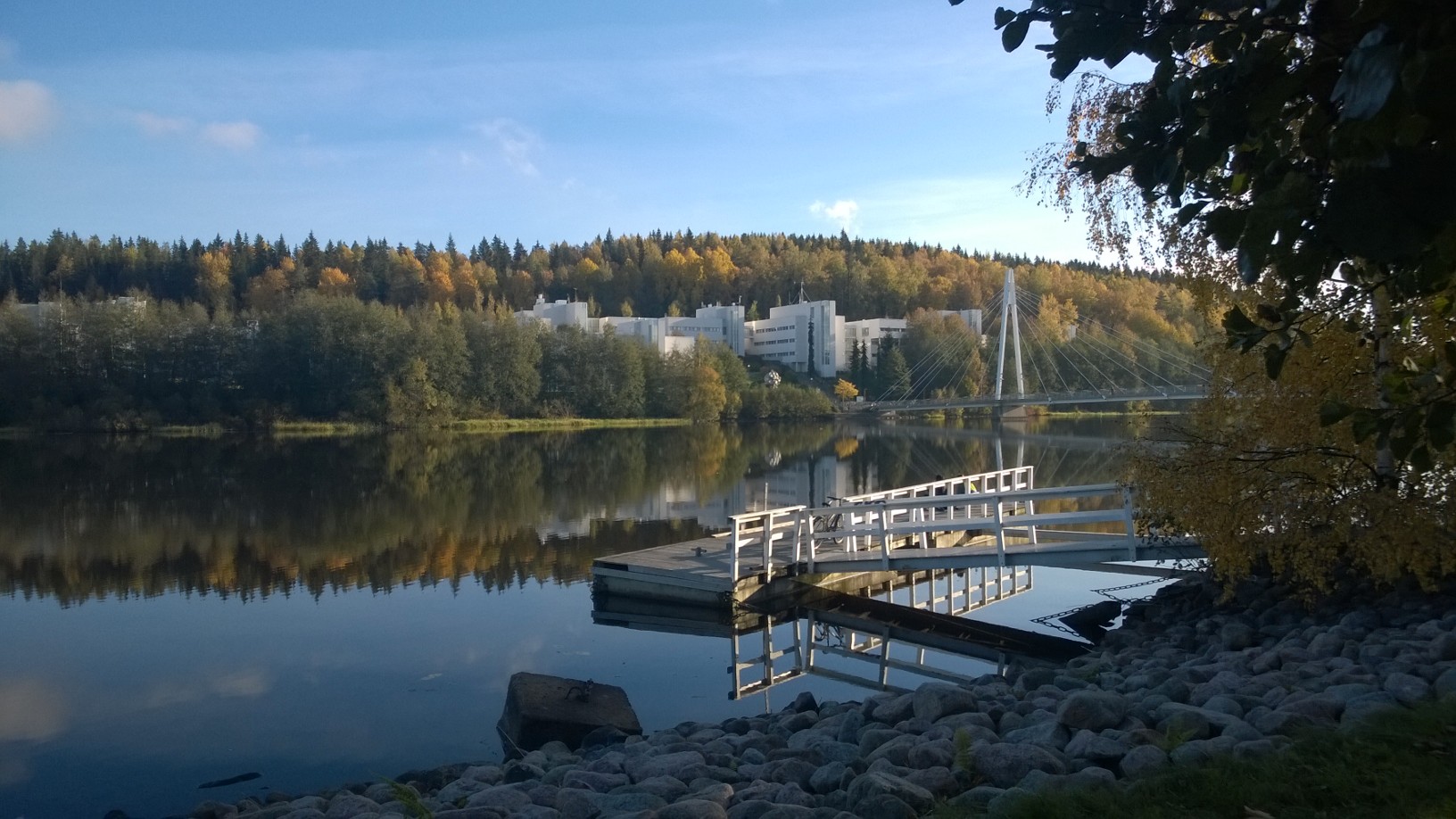

The view on the Jyväsjärvi Lake in the center of Jyväskylä with Ylistönrinne Campus in the background (photo source: Jyväskylän kaupunki promotional materials).
Uncategorized

Chairing the ECREA Visual Cultures Section

What motivates me at most in my academic work (and truly, motivation is really something that keeps raising my enthusiasm to what I do) is the peer-support and the kind of collegial and friendship atmosphere in doing something together. This is why, I have always liked to be a part of academic international communities, gathered in various thematic associations.

One of such groups is the ECREA Visual Cultures Section, formed together with colleagues that I know from various different contexts. This has been a place – or actually the people – from whom I could always get constructive feedback. Our discussions have been always enriching. From this day on, together with Dr. Patricia Prieto-Blanco (Lecturer in Digital Media Practice in the Sociology Department at Lancaster, UK) and Dr. Maria Schreiber (Postdoctoral Researcher at the Department of Communications at the University of Salzburg, Austria) I am taking a lead as a Chair of the ECREA Visual Cultures Section. We would like to continue the work that the previous chairs, Prof. Asko Lehmuskallio and Prof. Paolo Favero established in the Section, but we also want to add new. Foremost, however, we want to keep this Section as a place open for constructive discussions about and through the visual from many disciplinary angles.

Uncategorized

Growing with your students

I think that the most rewording aspect in teaching is my own learning, together with students. Such learning occurs on various levels — from the course planning and preparation of the learning materials and throughout the teaching process in the classroom. Due to the nature of the subject that I teach, that is, visual communication and the interpretation of the visual, there is always something new to discover together with students, even using the same image or the same activity in several courses. It is so fascinating that while teaching with and about visuals, you can never get bored.

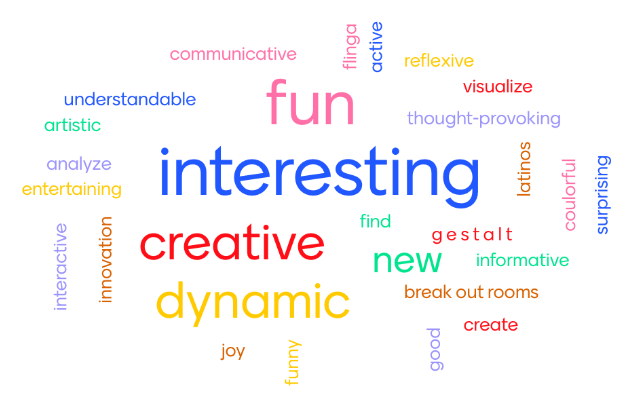
If you would need to describe this course in three words, what would they be? – students’ course evaluation in a form of a word-cloud.

Just yesterday, I had the last class of an intensive one-week summer school course in visual communication, which I was co-teaching with my colleague, Rasa Zakeviciute. This was the first time we were teaching together in an online environment. What is more, we not only designed a completely new course, but we also designed it especially for an online teaching mode. In this sense, we were more lucky than many of our colleagues, who, under pressure of time (and often without sufficient knowledge and experience) moved their face-to-face courses online. We could plan the course from the start as a fully online experience.

We had two main goals when we were planning the ‘Visual Communication as a Way to Improve Working Life Skills’ course. The first one, built on the approach we have already implemented in the ‘Visual Research Methods’ courses, that is of visual pedagogy. The other was to create a balance between synchronous and asynchronous teaching, that is, to constantly keep in mind that we are planning an online course, not a face-to-face one (an aspect of which many teachers do not think). For that reason, students received all the learning material in a form of video-lectures, other videos and readings as well as individual assignments and group work. Thus, the two-hour online classes per day could have been devoted solely to activities and discussions, based on the learning material (which students could have explored beforehand in their own peace). That kind of approach can especially benefit students of various linguistic backgrounds (they can use dictionaries, or listen to lectures several times), from different geographical locations (we worked between time-zones of 8 or even 11 hours of time difference) and busy with other commitments (they can schedule their study time).

In this course, we had a really great group of students. It was so rewarding to work with all of them. Their ideas and ‘ways of seeing’ enriched my experience as a teacher and visual scholar. We also had fun all together in the course. The online teaching is any worse from the face-to-face classroom. Actually, when well planned (and with an intention for good online teaching), it can be a truly rewarding learning experience, both for students and for their teachers.

Uncategorized

“Teaching Visually” – a book project

This is a book that I have been long waiting for to work on. For the past few years I have had different concepts about it and rather than sitting down and thinking about it – I kept engaging in other publication projects (some successful and some not).

Now came the time when I got really excited about this book, and thus, I can also picture it (finally!) in my head. This will be an edited collection with the working title “Teaching Visually: A Guidebook to Visually Immersed Higher Education”. Excellent contributions from more than ten authors, with various teaching experiences (nationally, culturally and subject wise) will form its core. This will be complemented by an extended Introduction, in which I will elaborate on the key concepts related to visual education in the university context. The book is to be completed with a year, by December 2021, including two review rounds (one of which will hopefully be a publication workshops with all involved authors). The book is contracted with Brill/Sense for their series “Advances in Teaching and Teacher Education”.

Uncategorized

Virtual proximity and transnational familyhood – new article!

In the study published in the article: Virtual proximity and transnational familyhood: a case study of the digital communication practices of Poles living in Finland I use a concept of virtual proximity, meaning the emotional closeness between individuals afforded by digital technologies and mobile communication. Through ethnographically driven inquiry among five Polish-speaking families living in Finland, I identified four thematic patterns in participants’ practices in digital habitats: (i) children’s agency in creating family WhatsApp groups, (ii) the use of family in-app communication for language learning purposes, (iii) digital caregiving strategies and arrangements, and (iv) the use of digital photo-sharing as a form of visual co-presence.

The study is part of the project ‘Whats in the App? Digitally-mediated communication within contemporary multilingual families across time and space’ supported by the Academy of Finland (grant number: 315478). And the article is open access!

Uncategorized

Interactive collage as elicitation technique – new article!

Enjoy reading my article discussing some of the results of my fieldwork among Polish transnational families living in Finland: Performing transnational family with the affordances of mobile apps: A case study of Polish mothers living in Finland, published in the Journal of Ethnic and Migration Studies.

In the auto-driven visual elicitation interviews with Polish mothers, I look at family constellations and technologically mediated communication practices. Applying the technique of an interactive collage, study participants visualised kinship relations, using colored cards showing silhouettes of adults and children and icons of mobile apps. The technique of an interactive collage is my contribution to enrich visual elicitation methodology.

The study presented in this article was supported by the Academy of Finland [grant number 315478] and conducted as part of the project: What’s in the app? Digitally-mediated communication within contemporary multilingual families across time and space (2018-2022).

Uncategorized

Education Development Award for 2019

…for collaborative and diverse development of teaching and learning at the department.

obrazek JPEGI received this award in collaboration with my departmental colleague, Dr. Judit Hahn, with whom we have collaborate in recent year quite intensively on various initiatives related to teaching development. The award is granted by the Vice Rector of the University of Jyväskylä, Prof. Marja-Leena Laakso, upon recommendations from the Educational Council of the university (more on the award: here).
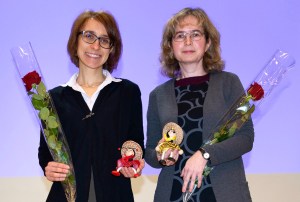
Everything started one day in the coffee/break room in our department… We haven’t yet known each other with Judit as I joint (back) my department after two years since I completed my PhD. During this time, the unit has grown as a result of merge of two departments, these of communication and languages. So, yes… the coffee-room… we got to know each other by simply complaining on a lack of equal treatment in university policy (and thus also on department’s and faculty’s levels) the two main activities, that is, ‘research’ and ‘teaching’. Those who succeeded in research received recognition, but small and big achievements in teaching practice remain silent. As a consequence, raising an issue to develop quality of teaching in the department (or university) seems not be a popular activity or topic for discussion.

award_2019
Me and Judit, with the Teachers’ Chat Room’s mascots, after receiving the award.

I am not experienced teacher, but Judit is. I do not have much opportunities to teach, so I research topics related to university pedagogy and teaching practices, especially in a context of visual education. As a team, we introduced the Teachers’ Chat Room (TCR), a space and a time for all members of the Language Campus/Department who are involved, or interested in teaching to share their ideas, good practices, excitement, frustrations, accomplishments, and questions related to teaching and education. The TCR is a place for both junior and senior members of the university community interested, or involved in teaching. During the TCR meetings we have opened up the following topics:

  • the first lesson: lesson planning, icebreakers, tips and tools for a good start;
  • digital tools in teaching;
  • object-based learning and visual literacy (guest: Dr. Olivia Meehan, Melbourne University, Australia);
  • trial lecture: preparation, performance and evaluation (forthcoming TCR);

The main idea behind the TCR is to create an informal meeting-place for sharing, peer-support and learning from each other. Thus, to develop university teaching and pedagogy in a community spirit.

We are also involved in few more initiatives related to teaching development (e.g. The First Year Experience development group; making teaching visible on department’s website; extensive publishing on topics related to pedagogy), hoping that in the future, teaching, and thus, excellence in teaching will receive more recognition. I also hope that in the future, faculty members receiving this and similar awards will hear ‘congratulations-words’ from the heads of their units as they would have heard if this would be an award for the research merits…

TCR
The Teachers’ Chat Room’s mascots.


Uncategorized

Today’s visual literacy is multisensory – notes from the IVLA 2019 conference

The IVLA conference in Leuven, Belgium (16-19 October 2019) started from a provocative, or even quite arrogant keynote by Brian Kennedy. He suggested that within the current condition of the visual, the IVLA should even consider changing its name! I don’t think it needs to go this far. Many papers presented during these two days have, indeed, indicated that the visual is currently understood more broadly – more as a (multi)sensory experience.

What is more, seeing does not only happen through our eyes. Instead, looking and seeing is fully embodied experience. I would like to know, however, where in our bodies we experience ‘seeing’?

Regarding the image, the act of seeing employs a number of senses as well as our (life) experience, knowledge, history, etc. However, what we see is not always ‘what’ and ‘how’ something is (as Nettie Boivin indicated in her paper). In another keynote, addressed by Alva Nöe, I noted a similar point: we do not achieve ‘seeing’ only by opening our eyes.

One of the most interesting initiatives toward development of visual literacy and reported at the conference is the “Power of Pictures” program in the UK. Charlotte Hacking, program leader, talked about the project that brings back picture books to primary education curriculum. The focus on visual literacy had positive impact on children’s literacy skills development. Elsewhere during the conference, it was also mentioned that children are naturally visually literate. This can be particularly observed in the drawing activities.

The conference provided me with a lot of inspiration, ideas for some new teaching activities as well as with more understanding where we are in terms of visual literacy theory and practice. I finally met people that I knew before only from online collaboration. Let’s see where this ‘embodied’ experience will lead me/us in terms of today’s and future visual literacy.

Uncategorized

Visual prompts and visual methods in multilingualism research

A real eye opener to practiced-based visual research methods, variety of approaches and innovative ideas – a 3-day workshop “Visual prompts and visual methods in multilingualism research”, organized by the MultiLing Research Center at the University of Oslo, Norway, that took place 17-19 June 2019 (and that I was lucky to participate in).

I must confess to my initial skepticism regarding the content and context of this event: visual research methods and language studies brought together… I know, of course, that visual methods are multidisciplinary. However, my initial encounter with VRM scholarship within the discipline of linguistics raised many questions and doubts. These mainly concerned an issue if the methods applied and referred to are, actually, visual research methods (in a way I used to know them). In this context, the Oslo workshop truly enriched my knowledge about VRM. It also demonstrated that VRM can be, indeed, applied across disciplines.

The paper that I found particularly interesting and “absolutely visual” in approach was a study of sign language in a form of auto-driven visual elicitation. Maartje De Meulder and Annelies Kusters used a well-known (in language studies) method of a language portrait (a method that I would have questioned the most, based on my initial readings). However, examples of data that they showed were very reach, with a variety of participants’ approach to the idea of “drawing the language”. In addition, and as a common practice in sign language research, they presented extracts from video interviews. Here, participants could really explain and present their relationship with language(s). I was truly surprised by how the language can be embodied – that was both showed in the drawings of language portrait and in the video interviews.

In addition to many interesting papers, I was also positively surprised by a new format of a material session. It can be understood as a more relaxed and even more engaging variation of a traditional poster session. In this case, presenters were introducing their cases, or actually the methods they applied, in a form of a variety of materials they could have brought to the table (so there was no actual posters, but table-spots with a scholar you could approach for further explanation of her/his research).

In addition to the regular paper, I was also presenting my auto-driven elicitation method of an interactive collage in the material session. A method of an interactive collage, I have recently applied in the fieldwork with Polish-speaking families living in Finland (as part of the ‘WhatsInApp’ project). And again – I was positively surprised by a high interest in both the method and my project. I came to this workshop as a sort of “outsider”, visual scholar with a background in communication studies. I thought I will not be able to find a common language (sic!) with language scholars. And it turned out to be the opposite – actually, here, I finally talked to researchers who are very practice-oriented. They also really kept the focus on visual methods, which I could not always observe with my visual cultures/studies colleagues on some other occasions. At the “Visual prompts” workshop there were, of course, some papers and discussions that I was not able to follow and engage in, having no background in linguistics. Nevertheless, these three days were very refreshing and particularly important in bringing new ideas and motivation for my further fieldwork in the ‘WhatsInApp’ project.

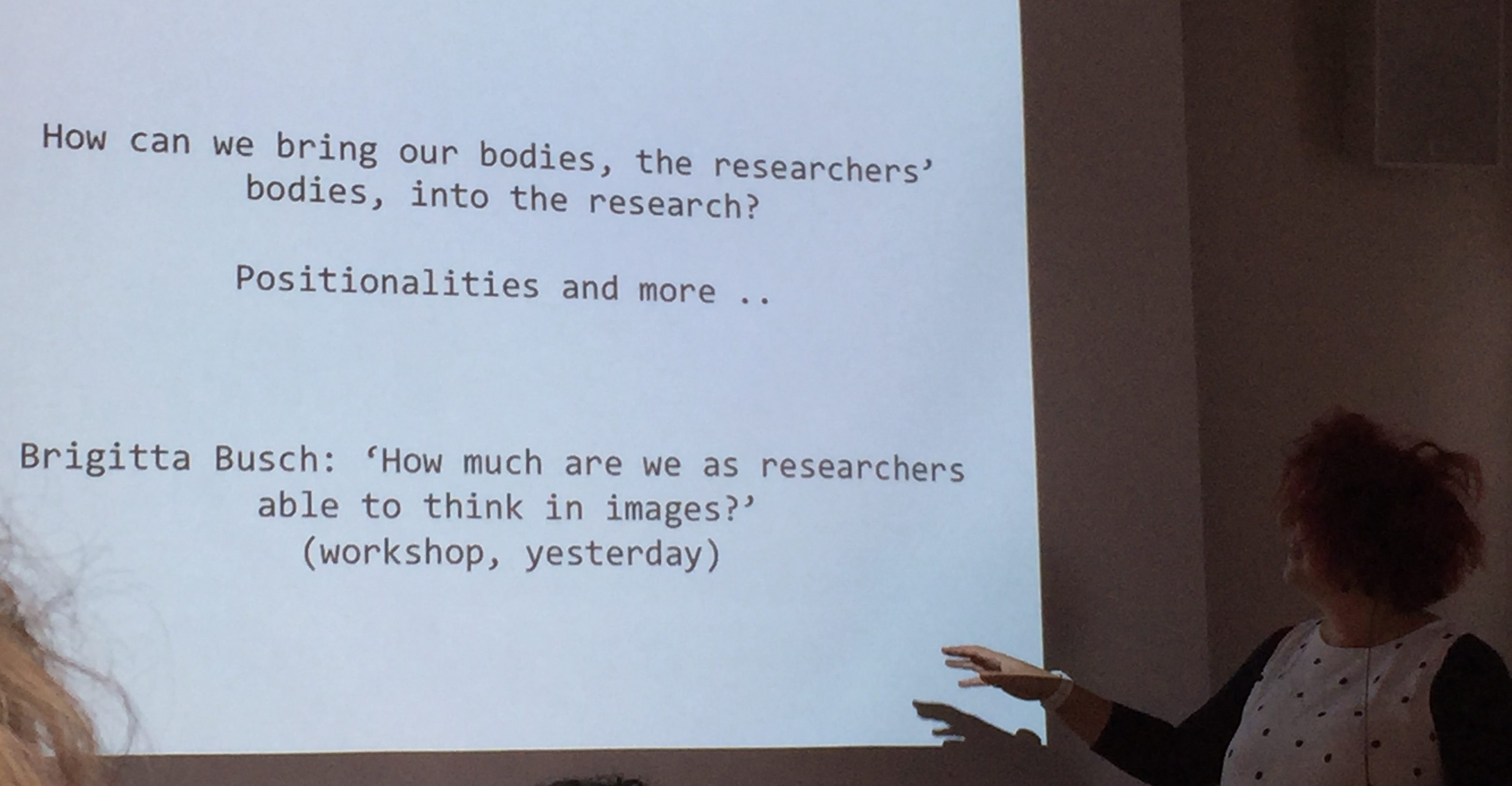
Workshop summary with a focus on researcher position in the research process (in a fieldwork) and in relation to images.

Uncategorized

Special issue editorial: “Visual literacy practices in higher education”

I learnt a lot. I made some mistakes that now I know could have been avoided if I would have had at least some editorial experience that I have now, when the process is over. Nevertheless, I am very proud that we both, i.e. me and my friend and colleague, Rasa Zakeviciute, made it to this point. Editing this (double) special issue of the “Journal of Visual Literacy” was a true adventure. Starting with issues with the Editorial Manager that we tried to solve when we both were on holidays in different countries; including looking for reviewers across academic context (and thus getting to know when they all have holidays); up to hours of editorial meetings along with long evening phone-calls trying to solve disciplinary disagreements between communication studies (me) and social sciences (Rasa) paradigms.

At the same time we experienced a lot of academic freedom in the editing process from Maria Avgerinou, editor-in-chief of the journal. We did not simply put the papers together, but we really worked with each single contributor to make this special issue happen. Thus, we acted both as guest editors as well as reviewers (in addition to the double blind peer-review process). You can enjoy an extensive introduction to this special issue in the Editorial, just being published ahead of print.

In order to read all eleven contributions, we still have to wait before they appear online, but here is the list of what you should look forward to:

  1. Asko Lehmuskallio. The look as a medium: A conceptual framework and an exercise for teaching visual studies.
  2. Gary McLeod. Rephotography for Photographers: discussing methodological compromises by post-graduate online learners of photography.
  3. Terry Loerts and Christina Belcher. Developing visual literacy competencies while learning course content through visual journaling: teacher candidate perspectives.
  4. Wendy R. Williams. Attending to the Visual Aspects of Visual Storytelling: Using Art and Design Concepts to Interpret and Compose Narratives with Images.
  5. Jeeyoung Min. Visual literacies in a U.S. undergraduate writing course: A case study of transmediation.
  6. Suriati Abas. Reading the world – Teaching visual analysis in higher education
  7. Dana Statton Thompson. Teaching students to critically read digital images: A visual literacy approach using the DIG Method.
  8. Choon-Lee Chai. Enhancing Visual Literacy of Students through Photo Elicitation.
  9. Vered Heruti. Reading Personal Photographs: A Case Study at an Israeli Art College on Multiple Identities.
  10. Gyuzel Gadelshina. Arrian Cornwell and David Spoors. Understanding corruption through freehand drawings: a case study of undergraduate business students’ visual learning in the classroom.
  11. Rosalina Costa. iPhone, iResearch. Exploring the Use of Smart Phones in the Teaching and Learning of Visual Qualitative Methodologies.