Uncategorized

To All My Students

I want you to know that I always look forward to meeting you in my classroom and hearing your comments, answering your questions, and sharing your experiences. I learn so that you can learn from me – but I also learn from you. This is about sharing what each of us knows and does not yet know. I spend many hours preparing materials for the class. But sometimes I worry that some things could have been done better. And so I try to improve the materials, the content, the assignments for next time. But even when I worry that my course or a particular lecture, seminar, or assignment was not good enough – I hear from you, in the feedback or after class, that you really enjoyed the course and learned a lot. Thank you for that.

I want you to know that the best reward I get for all the effort I put into teaching is when you come up to me after class and say that this was the best class you have ever taken; that you want more of these classes; that you loved all the topics and that you learned a lot and that this course made you think differently. Then I know it was all worth it!

Uncategorized

Title of Docent in Visual Literacy

In May 2022, I applied for the docentship in visual literacy at Tampere University. I had been thinking about it for at least a year before that. And after a long process, the decision was made and signed on January 28, 2024. From now on I have the title ‘dosentti’ – decent in visual literacy, which has some important meaning in the Finnish academic context (for example, I can serve as an examiner for doctoral theses). In English it translates as Adjunct Professor, but there has been a lot of discussion about the exact translation, which will not be misleading for those unfamiliar with Finnish academia.

I am very grateful to Prof. Asko Lehmuskallio, who helped me to initiate the process and to revise the documents, and who introduced my application to the Faculty (as it is required that a professor in a relevant field proposes the docentship application for consideration). This was followed by an external review of my academic work by two academic experts in the field, and the teaching demonstration I gave at Tampere University, which was evaluated by the committee.

The title of docent is an official proof that my academic work is valuable, important and at a high level. At the same time, I am facing a long period of unemployment with a few hourly-based contracts and will soon be unable to keep up with my academic colleagues who have funding and tenure. So not much to celebrate.

Uncategorized

Teaching: Intensive but Rewarding

I don’t know what’s about September, but it’s always so intense in terms of all possible work tasks. One year this is about founding application, the other year it’s about conferencing, and then yet another one is about teaching. This year it started already on September 1st, with a session on “What is… visual research?” collaboratively organized with Dr. Mélodine Sommier at the Methods Festival at the University of Jyväskylä.

Following, I was teaching an intensive doctoral course on Visual Research Methods and Methodologies at the same university. This was a new course, which I wanted to introduce already a while ago as I noticed a clear need for it over the years I worked at this university. We had four very intensive Tuesdays (20 teaching hours in total), during which we discussed our ways of seeing and interpreting visual imagery, methods to analyze found images, and participatory visual techniques. As always, I was worried if it was “enough” and how well it helped and guided participants toward their future endeavours with visual research. I was worried to the extend that I did not ask for the course feedback. And here it came, some wonderful comments from the participants, spontaneously sent to me by the participants:

Thank you again for the course – what an absolute delight it was! My mind is buzzing with ideas for future research.

I must thank you for the inspiring, clear, intellectual building blocks giving course of research. The group and the lecturer (i.e. you) empowered me enormously.

And I’m also continuing my Friday teaching trips to Tampere University to teach a course on Visual Cultures and Technologies. This year, in addition to challenges of the hybrid format, I’m also having a larger group of 34 students in the course. I’m still trying to devote as much as possible time for questions, discussions and group activities, and I’m so much looking forward to students’ visual case studies they will introduce in the second part of the course.

So, yes, September… or, well, it’s October already!

Uncategorized

Best Congress Award to IVLA 2022 Conference!

The IVLA2022 conference I organized in August as Chair of the Local Organizing Committee just received the Special Mention as the Best Congress that took place in 2022 in Jyväskylä. Together with IVLA2022, only four events were awarded by the City of Jyväskylä and the Jyväskylä Convention Bureau. The press release from the award ceremony can be read HERE (in Finnish).

I am extremely proud of this recognition, especially that this was the first event of this kind that I was fully in charge of as a Chair. Enormous work was involved in planning and managing the whole event, and I would not make it without my wonderful team: Terhi, Rasa, Judit and Anne.

Uncategorized

About images without images – New article just accepted (edit: published!)

How to write about images without looking at them but only hearing about them from the study participants? How to analyze images without images? How to conduct “visual studies” if you end up only with verbal narratives as your data? – These were the challenges I faced when I completed data collection for the project What’s in the app? Digitally-mediated communication within contemporary multilingual families across time and space (2018-2022), led by Professor Åsa Palviainen. My work in the project ended in March 2021 and the article on narratives about family photography was submitted in May. After two rounds of reviews in three different journals, the article WhatsApp iconology: Narratives on in-app photographic practices in (transnational) family communication was finally accepted in mid-January 2023 by the Journal of Ethnic and Migration Studies.

I learned a lot while working on this article. Thanks to colleagues from the ECREA Visual Cultures Section, I was able to start the whole analysis as they guided me toward W.J.T. Mitchell’s ideas on imagetext and iconology. This theoretical framework helped me to look at images without seeing them (so having no visual data at hand) but hearing about them (so working on what participants told about their visual communication practices in mobile communication in transnational family context).

The study presented in the article lays at the intersection of visual culture studies, mobile communication, migration and transnationalism (transnational family communication). Hence, I also faced difficulties in finding the most suitable forum to publish it (and so, two journals rejected it in the second review round). However, I found the Journal of Ethnic and Migration Studies as the most welcoming and encouraging place for this article. And I am happy it will be published with all the elements I really wanted to keep there, including a personal, an ethnographic-like twist in the beginning, referring to my reading of R. Barthes’ Camera Lucida as a student, many years back.

EDIT: As of January 31, 2023, you can now read the article here (the link provides access to the free copy of the article).

Uncategorized

“Visual Pedagogies” book launch summary

Both events of the online book launch of “Visual Pedagogies in Higher Education: Between Theory and Practice” were a great opportunity to share the work included in the volume. It was wonderful to see many colleagues attending these events, asking questions and discussing. I was happy to see those of you who I know and have been collaborating with on various occasions, and many persons who I did not know before but who were intrigued by the work related to visual pedagogies. Let’s the ideas around visual pedagogies continue to evolve into new and further collaborations!

A visual summary of both events was captured visually by Iryna Molodecky, one of the contributors to the volume. She kindly agreed for this image to be shared here. In case you want to know more about her work, check Iryna’s website (of course, in addition to her chapter in “Visual Pedagogies”).
Uncategorized

“Visual Pedagogies” Book Launch

Come and get inspired by the ideas on how to implement elements of visual pedagogies in university education

Two events, on November 16th and 22nd, are organized to launch newly published book “Visual Pedagogies in Higher Education: Between Theory and Practice” which I edited. Each event will start with a short overview of the book (by me) and will follow by the introductions to four chapters (by the contributors). There will be time for questions, exchange of ideas and discussion.

You are welcome to attend both events or to choose one, based on your schedule and interest. Sign up HERE to get the Zoom link.

On 16th November at 2:00 – 3:00pm (EET / UTC+2) we will hear introductions to the following chapters:

  • As Visual as Possible: The Pedagogy of Visual Research Methods in a Finnish University (by Joanna Kędra and Rasa Žakevičiūtė)
  • Discipline-Led Thinking through Cultural Collections and Art (by Olivia Meehan)
  • Photomedia Literacy in Ruins? Student Attitudes toward Digital and Analog Photomedia When Creating an Archive for the Future (by Gary McLeod and Tad Hara)
  • Learner-Generated Video: Video Creation Process for Developing Visual Competencies (by Pınar Nuhoğlu Kibar)

On 22nd November at 3:00 – 4:00pm (EET / UTC+2) we will hear introductions to the following chapters:

  • Teaching Photography Theory to Art Students: Three Case Studies (by Marianna Michałowska)
  • Using Visual Art Practices to Enhance Educators’ Professional Growth (by Karen F. Tardrew)
  • How Drawing Enhances Learning for Business Students (by Iryna Molodecky)
  • The Use of Freehand Drawing as a Means of Teaching Research Methods in a Business School (by Gyuzel Gadelshina)
Uncategorized

Book: Visual Pedagogies in Higher Education

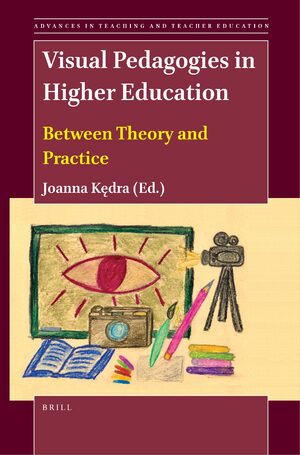
My edited book “Visual Pedagogies in Higher Education: Between Theory and Practice” is already in the production process! The publication date is set up for October/November 2022, so very soon. It has been a great learning process for me and I am grateful to all contributors who make it possible to open the topic of visual pedagogies from so many different perspectives.

And here comes the table of contents for this volume:

Introduction: Visual Pedagogies in Higher Education
Joanna Kędra
Part I:Visual Pedagogies in Research Methods Courses
Chapter 1As Visual as Possible: The Pedagogy of Visual Research Methods in a Finnish University
Joanna Kędra and Rasa Zakeviciute
Part II:Visual Pedagogies in Business Studies
Chapter 2How Drawing Enhances Learning for Business Students
Iryna Molodecky
Chapter 3The Use of Freehand Drawings as a Means of Teaching Research Methods in a Business School
Gyuzel Gadelshina, Rob Wilson, Paul Richter and McKenzie Lloyd-Smith
Part III:Visual Pedagogies and Object-Based Learning
Chapter 4Discipline-led Thinking Through Cultural Collections and Art
Olivia Meehan
Part IV:Visual Pedagogies in Photography Education
Chapter 5Photomedia Literacy in Ruins? Student Attitudes toward Digital and Analogue Photomedia when Creating an Archive for the Future
Gary McLeod and Tad Hara
Chapter 6Teaching Photography Theory to Art Students — Three Case Studies
Marianna Michałowska
Part V:Visual Pedagogies in Teacher Education
Chapter 7Learner-Generated Video: Video Creation Process for Developing Visual Competencies
Pınar Nuhoğlu Kibar
Chapter 8Using Visual Art Practices to Enhance Educators’ Professional Growth
Karen F. Tardrew
Concluding Note: Measuring Success in Visual Pedagogies
Joanna Kędra
Uncategorized

IVLA 2022 Conference in Jyväskylä (10-12 August)

The IVLA 2022 Conference is just a week ahead. I am so grateful to the whole local organizing team – I would not be able to make it without Terhi Paakkinen, Judit Hahn, Rasa Zakeviciute and Anne Pitkänen-Huhta. I have learnt a lot during this time, both the good and the bad about organizing a conference. I hope that the attendees, both onsite and online, will enjoy the event and get as much as possible from it.

A picture containing text, tree, sign, plant

Description automatically generated

Uncategorized

Honored with the 2021 IVLA Research Award

This year International Visual Literacy Association (IVLA) annual conference (4-6 November 2021) came with a surprise to me – I received the IVLA Research Award! It was presented to me in recognition of my active involvement in outstanding research that furthers the cause of visual literacy and my achievement in advancing knowledge within the field.


As it stays in the award description, it is given only when merited, to members of the Association who are actively involved in on-going outstanding research that furthers the cause of visual literacy, who have achieved a substantial, record of scholarly publication, and who have significantly advanced knowledge within the field.

I am very honored with this recognition of my research work. It truly motivates me to continue with research and pedagogical projects related to visual literacy in a higher education context. I also hope that my hope institution, University of Jyväskylä, will finally acknowledge the importance of cross-disciplinary visual education and I will have a chance to develop this area further.

And here is some information from the press release about the award:

Joanna Kędra was nominated for the Research Award for her heavy involvement in bringing consistency to how the term visual literacy is used within scholarship and her ability to arrive at concrete goals for the field of visual literacy through her own scholarly work. Kędra’s visual literacy scholarship within the last three years has resulted in editing a special issue of the Journal of Visual Literacy and a forthcoming book on visual literacy in education. These are just two examples of Kędra’s accomplishments within the field of visual literacy but there are many more. Gary McLeod, Kędra’s nominator and Assistant Professor of Photomedia and Visual Design at the University of Tsukua, Japan wrote that Kędra’s work is, “vital for future generations to identify and manage visual bias regardless of whether they are ‘reading’ images, making them, or even thinking in terms of visuals. It is difficult to imagine the current picture of VL studies without her contributions”. Joanna Kędra is one of ten people to be awarded the Research Award since its inception in 1989.